
Gua Sha & Jade Hair Combing: Ancient China’s Rituals for Balance & Flow
In Ancient China, beauty was never just about appearance—it was about balance, circulation and the harmonious flow of Qi (life force energy) throughout the body. Rituals like gua sha and jade hair combing were practiced not as trends but as daily acts of self-regulation, longevity and inner calm.
Today, these time-honored techniques are experiencing a renaissance, reminding us that true glow begins beneath the surface.
During a recent visit to Zen Hair Salon in Coral Gables, I had the opportunity to experience these ancient rituals through a modern, intentional lens with Jocelyn of Fem Face Beauty, whose technique beautifully honors both tradition and anatomy.
A Brief History of Gua Sha in Ancient China
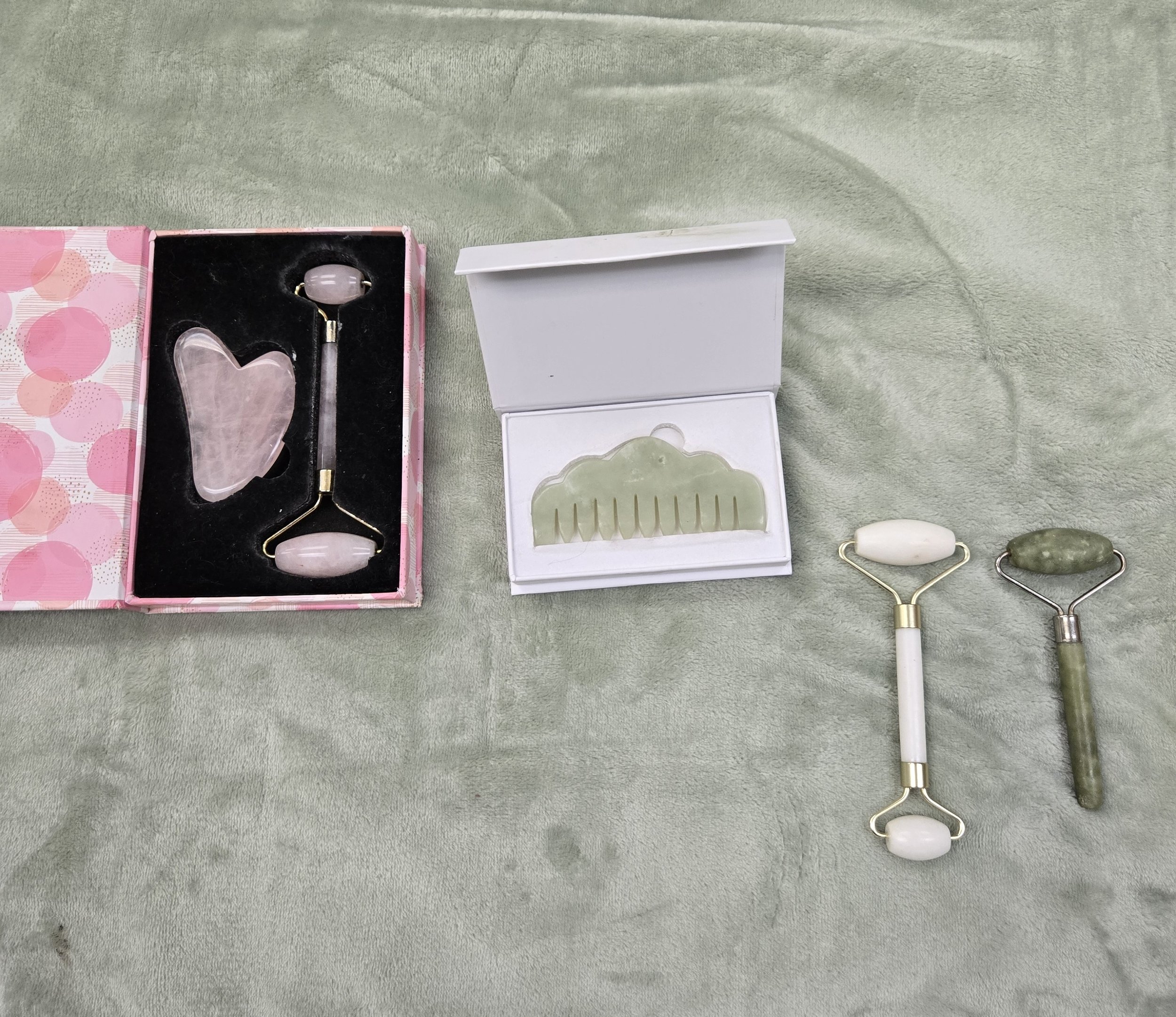
Gua sha dates back thousands of years and is rooted in Traditional Chinese Medicine (TCM). The term literally translates to “scraping sand,” referring to the gentle scraping motion used to stimulate circulation and release stagnation.
Historically, gua sha was used on the body to:
Improve blood flow
Support detoxification
Relieve muscle tension
Move stagnant Qi
Over time, facial gua sha emerged as a softer, more refined ritual—one designed to support lymphatic drainage, facial vitality and emotional release held in the jaw, neck and face.
Facial Gua Sha Tutorial with Jocelyn (Fem Face Beauty)
Zen Hair Salon · Coral Gables, Florida
Jocelyn’s approach is slow, intuitive, and deeply respectful of the lymphatic system—emphasizing preparation and drainage before sculpting.
“You don’t lift until you’ve cleared the pathways,” she explains.
Below is her step-by-step technique:
Step 1: Open the Lymphatic Drainage System
Before touching the face, Jocelyn activates the body’s main lymphatic exit points.
Armpits:
Gently massage for 10 seconds per sideCollarbones:
Light circular motions for 10 seconds
✨ Why it matters:
Opening these pathways allows lymph and stagnant fluid from the face to drain properly instead of backing up.
Step 2: Wash Down the Neck
Using the gua sha tool:
Glide downward along the neck
Continue for approximately 10 seconds
✨ Why it matters:
The neck is the main highway for lymphatic drainage. Clearing it first prevents congestion and puffiness later.
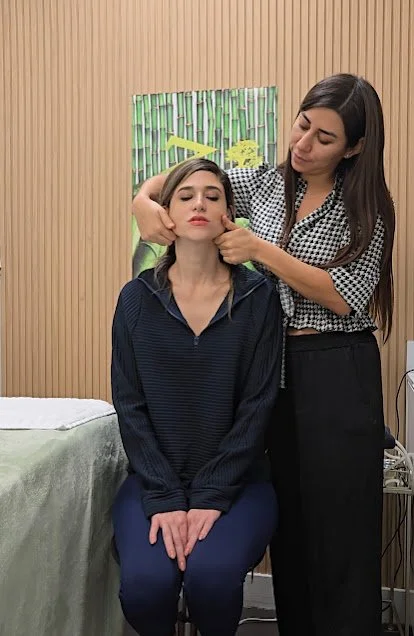
Step 3: Jawline Release & Drain
This is where many people unknowingly hold emotional and physical tension.
Gently anchor the skin at the chin
Hold the gua sha at a 25° angle
Glide along the jawline toward the ear
After each pass, drain downward through the neck
✨ Why it matters:
This step releases stored tension, supports facial symmetry and softens the jaw without aggressive pressure.
Step 4: Sculpt the Cheekbones
Begin at the nasal folds
Glide upward and outward toward the ears
Use slow, intentional strokes
✨ Why it matters:
This encourages lift while respecting the natural structure of the face—no forcing, only guiding.
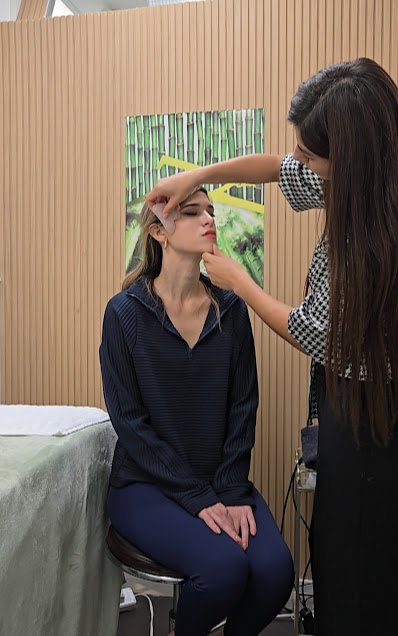
Step 5: Under-Eye & Brow
The most delicate area requires the lightest touch.
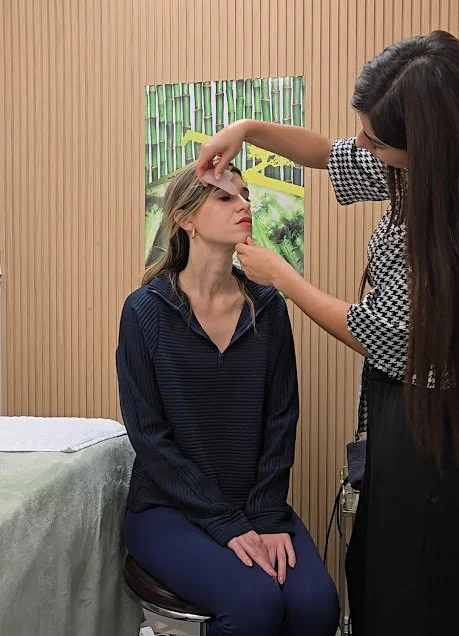
Gently sweep under the eyes
Continue along the brow bone
Always move outward
✨ Why it matters:
This step helps reduce puffiness, supports circulation and relaxes facial muscles linked to stress and focus.
Jade Hair Combing: An Ancient Crown Ritual
In Ancient China, jade hair combing was considered just as important as facial rituals. Jade—believed to carry calming, protective properties—was used to stimulate the scalp’s meridian points.
Historically, this practice was said to:
Calm the nervous system
Improve circulation to the scalp
Support mental clarity and longevity
Jade Hair Combing Technique
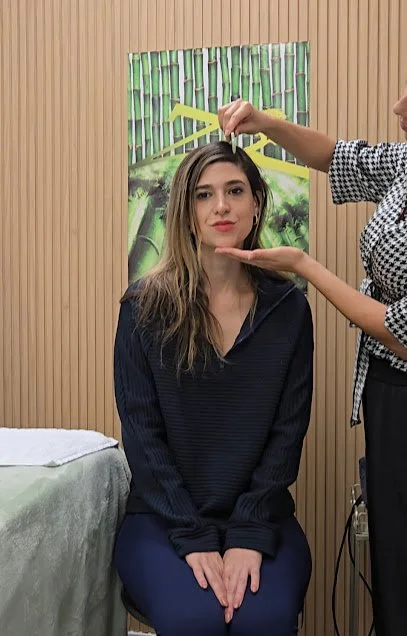
To close the ritual, Jocelyn incorporates jade hair combing:
Begin at the crown of the head
Slowly comb from scalp through the lengths of the hair
Move with intention, not speed
Repeat several passes, allowing the body to settle
✨ Why it matters:
The scalp is an energetic center. Gentle stimulation here helps ground the mind, release mental tension and seal the ritual with calm.
Closing Thoughts: When Beauty Becomes Ritual
Experiencing gua sha and jade hair combing in a salon setting—especially through Jocelyn’s thoughtful technique—was a reminder that ancient rituals were designed to bring us back into balance, not rush us toward perfection.
When Qi flows, tension releases.
When tension releases, glow follows.
These rituals are an invitation to slow down, listen to the body, and remember that beauty has always been an inside-out practice.